
BLACK ARTIST AS SOVEREIGN
By Beverly Aarons
For Black artists, whose existence remains politicized, the pursuit of artistic sovereignty is not a luxury but a necessity. But what does it mean to have artistic sovereignty?
When Augusta Savage (1892–1962) was invited to exhibit her artwork at the 1939 New York World’s Fair, she was one of only a few Black artists. The event organizers wanted her to create a sculpture celebrating Black contributions to music. She was reportedly paid between $360 and $1,200 and spent two years creating Lift Every Voice and Sing, a 16-foot painted-plaster sculpture featuring a group of robed Black choir singers arranged to form the shape of a harp. The sculpture's title paid homage to Lift Every Voice and Sing, originally written as a poem by James Weldon Johnson in 1900 and later set to music by his brother J. Rosamond Johnson. The song had become and continues to be an inspirational part of African American life. But the World’s Fair officials renamed the sculpture The Harp against Savage’s wishes, a change that partially decontextualized the artwork. Over 5 million people attended the 1939 World’s Fair, many of them viewing Savage’s sculpture. The artwork received critical praise in the press and was reportedly one of the most popular artworks at the fair. But when the fair ended, the sculpture was destroyed and discarded by cleanup crews. Savage could not afford to have it removed and stored. Only miniature replicas survive.
Augusta Savage had enough artistic freedom and institutional support to create a sculpture celebrating one of the most enduring African American hymns of hope and triumph over suffering. But because of structural constraints, she lacked the institutional power to shape how that sculpture's meaning was framed before an audience of millions.
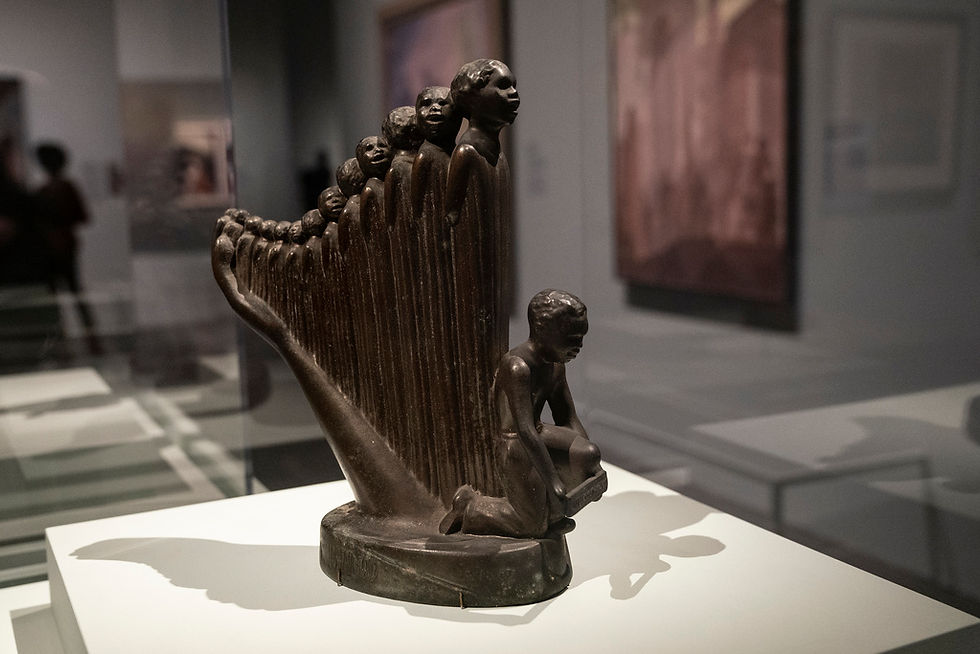
One of the key pillars of artistic sovereignty is the “construction of meaning.” There are essentially three sources of meaning for an artwork: the meaning an artist intends, the meaning the public attributes to the work, and the meaning institutions construct around the work. All three sources of meaning can be legitimate and are not necessarily in conflict. The artist, the public, and the institution are allowed to perceive the work differently while coexisting. But in the case of Savage’s World’s Fair sculpture, the institution overrode the artist’s expression of meaning by changing the title of her artwork.
There is a second pillar of artistic sovereignty that was partly inaccessible to Savage: boundaries. While she had the power to create an on-theme artwork of her choice, the structural constraints on Black creatives in 1939 left her with few attractive alternatives to the World’s Fair exhibition. She could refuse to show her work at the World’s Fair, but there were few financially viable outlets where Black visual artists could exhibit. In effect, the World’s Fair was an opportunity of a lifetime, and because other opportunities were scarce, walking away was more costly than staying. Even a costly choice can still be a choice. But the key is ‘choice.’ If refusing an opportunity could threaten an artist's livelihood, is the choice a meaningful one?
This is the point where individual sovereignty meets structural constraints. While Augusta Savage exercised sovereignty over how she would express herself artistically, the lack of structures able to support that sovereignty ultimately limited her control over how her sculpture’s meaning was constructed publicly. An artist exercising sovereignty over meaning not only has the power to say ‘no’ but also has the power to enforce their boundaries effectively when their artistic intentions are distorted. Any artist who is unable to correct a distortion of meaning is vulnerable to epistemic harm. When the World’s Fair officials renamed Savage’s sculpture The Harp, they created a dynamic where a reasonable but uninformed viewer might infer that the sculpture’s meaning was mostly related to its shape and not at all connected to a popular Black American hymn about hope and triumph over suffering. That could create epistemic harm by interrupting the transmission of artistic intentions. And that epistemic harm could create a second-order effect: disconnection from community.
When an artist creates something and places it into the world, they are creating an opportunity for community connection. Community could be people in their city, profession, ethnic group, or even the wider world of art enthusiasts. As a creative, they construct and transmit their own understanding of the work via titles, artist statements, talks, and more. But that doesn’t happen in a vacuum. The transmission of meaning often requires institutional support and mediation, from the funding the artist receives to the gallery curator who chooses what didactic text to place beside the art. Some forms of artistic sovereignty require structural support.
"When an artist creates something and places it into the world, they are creating an opportunity for community connection."
When ARTE NOIR curated the exhibition, Colored Girls for Colored Girls: Evolution of Expression, the institution not only amplified the artistic expression of individual Black artists but also cultivated and amplified collective meaning. The exhibition brings more than 30 artworks into conversation with Ntozake Shange’s for colored girls who have considered suicide / when the rainbow is enuf, written fifty years earlier. Among the artworks are Kendria Huff’s two netted sculptural vessels, with white fibers spilling from their openings. Huff describes the work as an exploration of hope and reciprocal connection: “As I honor my ability to hold for others, I am exploring what it means to be held.” The vessels can also be interpreted through the historical expectation that Black women must continually care for others while receiving little care themselves. These interpretations are not in conflict. Huff’s individual construction of meaning becomes part of a larger collective exploration of Black womanhood, facilitated by ARTE NOIR’s curatorial framework without displacing the artist’s own voice.
Guests taking in the Colored Girls for Colored Girls exhibit on view at ARTE NOIR. Credit Hilary Northcraft.
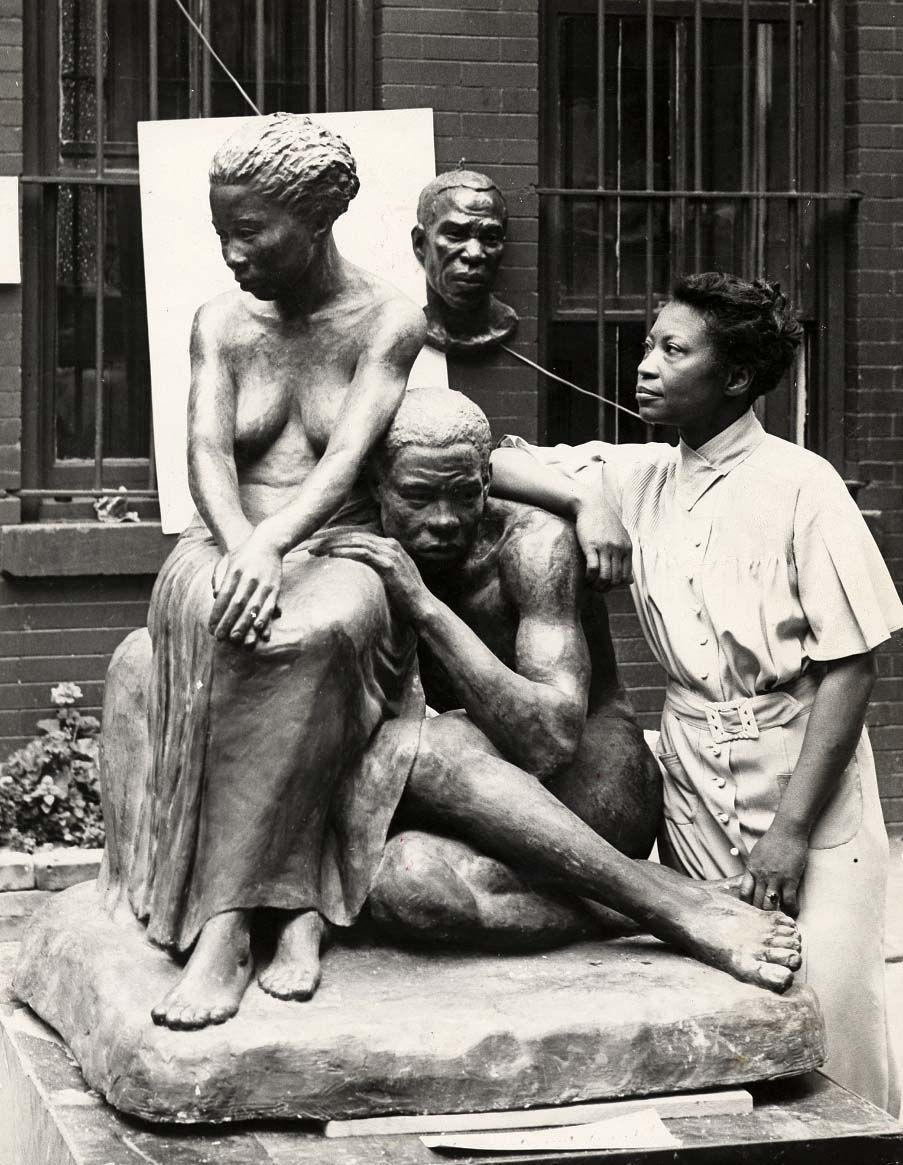
As a non-profit organization whose mission is to “celebrate and sustain Black art, artists, and culture,” ARTE NOIR is providing structural support to Black artists just as Augusta Savage’s “Salon of Contemporary Negro Art” did in 1939. Savage’s gallery, which opened in June 1939, attracted about 600 supporters to its opening but closed after just three months due to financial issues. Savage exercised sovereignty when she opened her gallery. And despite its brief existence, it positively impacted the lives of other artists in the community. But without ongoing financial support, it could not survive.
"To effectively exercise artistic sovereignty, Black artists must understand the individual power they hold and what types of power can only be cultivated through collective action."
“With $10,000 in seed money—almost a quarter of a million in today’s dollars—Savage and a team of advisers and investors secured gallery space in the most coveted part of Harlem. They signed 30 established and emerging artists to the salon’s roster, including Beauford Delaney, Gwendolyn Knight, Selma Burke, and James Lesesne Wells.” (Source: Town & Country)
Augusta Savage provides a historic example of what it looks like for Black artists to exercise sovereignty even under significant structural constraints. The gallery attracted initial capital, cultivated connections to other Black artists, circulated their art among a wider public audience, and presumably helped to amplify the Black artists’ constructed meaning around their work. But there is one pillar of artistic sovereignty that begins with the artist but requires a certain level of collective agreement—value. How an artwork is valued, both culturally and financially, requires a certain level of collective agreement within the social sphere in which that artwork exists. That doesn’t mean that everyone must agree on the value of that work, but that some people do agree on its value and are able and willing to act on that perceived value. And since Black artists continue to exist inside a social paradigm where the value of their work may be assessed through the lens of racism and misogyny, gaining fair value assessment may require structural supports. In the art world, structural supports that may increase the perceived value of an artwork hinge on quality attention (e.g. exhibitions, critiques, reviews, and awards).
Black artists exercise artistic sovereignty by engaging deeply with their own construction of meaning around their work, then intentionally communicating that meaning to the public and institutions that can provide structural support and mediation to amplify their voice. To exercise artistic sovereignty effectively, Black artists must understand the individual power they hold and the types of power that can only be cultivated through collective action.
Augusta Savage’s experience at the World’s Fair demonstrates the limitations of artistic freedom without corresponding institutional power. Her gallery and contemporary institutions such as ARTE NOIR demonstrate how Black artists and communities can build structures that expand that power. Ultimately, artistic sovereignty is not only the freedom to create. It is the power to help shape the conditions under which that creation is understood, shared, preserved, and valued.
ABOUT THE AUTHOR
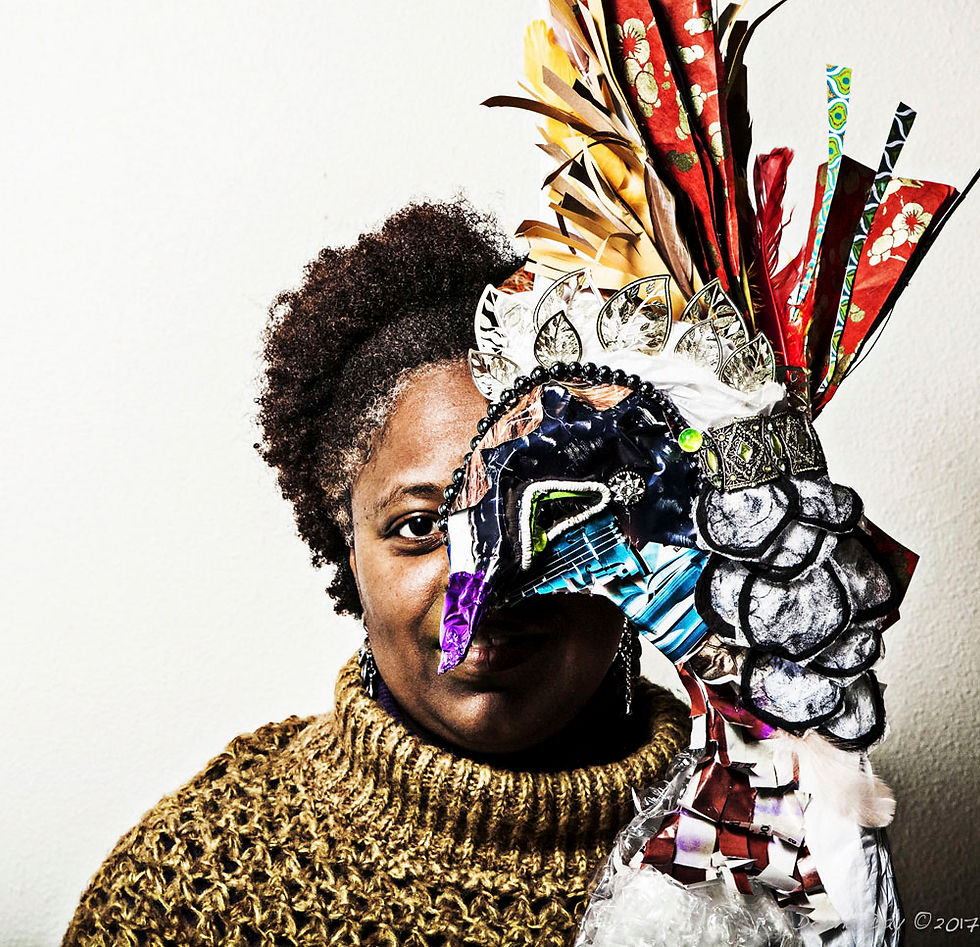
Beverly Aarons is a writer, artist, and game developer. She works across disciplines, exploring the intersections of history, hidden current realities, and imagined future worlds. She specializes in making unseen perspectives visible and aims to infuse all of her creative work with a deep sense of emotionality. She’s won the Guy A. Hanks, Marvin H. Miller Screenwriting Award, Community 4Culture Fellowship, Artist Trust GAP Award, 4Culture Creative Consultancies Award, and the Seattle Office of Arts & Culture smART Ventures grant. She was an ARTS at King Street Station Resident in 2021/2022, and her visual art has been exhibited at Studio 103 and Youngstown Cultural Arts Center. She’s currently producing a play about the future of human migration in collaboration with ShoreLake Arts, and she’s publishing Artists Up Close, a monthly e-magazine/newsletter that features in-depth and intimate profiles of emerging and established artists in the Seattle area and beyond.
Learn more about Beverly and her work here.

Comments