
CAPTURING BEAUTY THROUGH AN AFROSURREALIST LENS

Words by Remy Styrk
Images by Rubin Quarcoopome
Seattle-based artist, photographer, and designer Rubin Quarcoopome sat down to chat about his latest body of work and how he’s exploring Black identity, space, and the uncanny in everyday environments through an Afrosurrealist lens.
Rubin was born in Accra, Ghana, and came to the States around 8 years old, first to Ann Arbor, Michigan, where his dad, an artist and art curator, worked at the University of Michigan, then bounced around the Midwest. However, home was always a slice of Ghana in the middle of unfamiliarity, opening up his perspective of beauty—amplifying that whiteness is not the standard—and affirming his perception of beauty. Influenced by his dad and growing up surrounded by artists and art, becoming an artist himself was inevitable. Growing up and being taught to think of Ghana in every decision helped Rubin understand the impact of art on a social level and its monetary and story value. Additionally, creating a constant tension that birthed the multifaceted and evocative artist he is.
Rubin is someone I consider a cultural memory worker. The first thing he does when he meets you is go straight to the eyes—a multisensory point of connectedness: “I privilege the eyes...they reveal a lot, and I apply that to photography to find what the “eyes” are of whatever or whoever I’m photographing.”
For Rubin, every photoshoot, every photo series is a conversation and an act of shaping people and subjects in the context of who they already are. He is awakening the roots, as his art is alive and each piece is both a catalyst and a dip into an amorphous pool of possibilities that is ever-evolving.
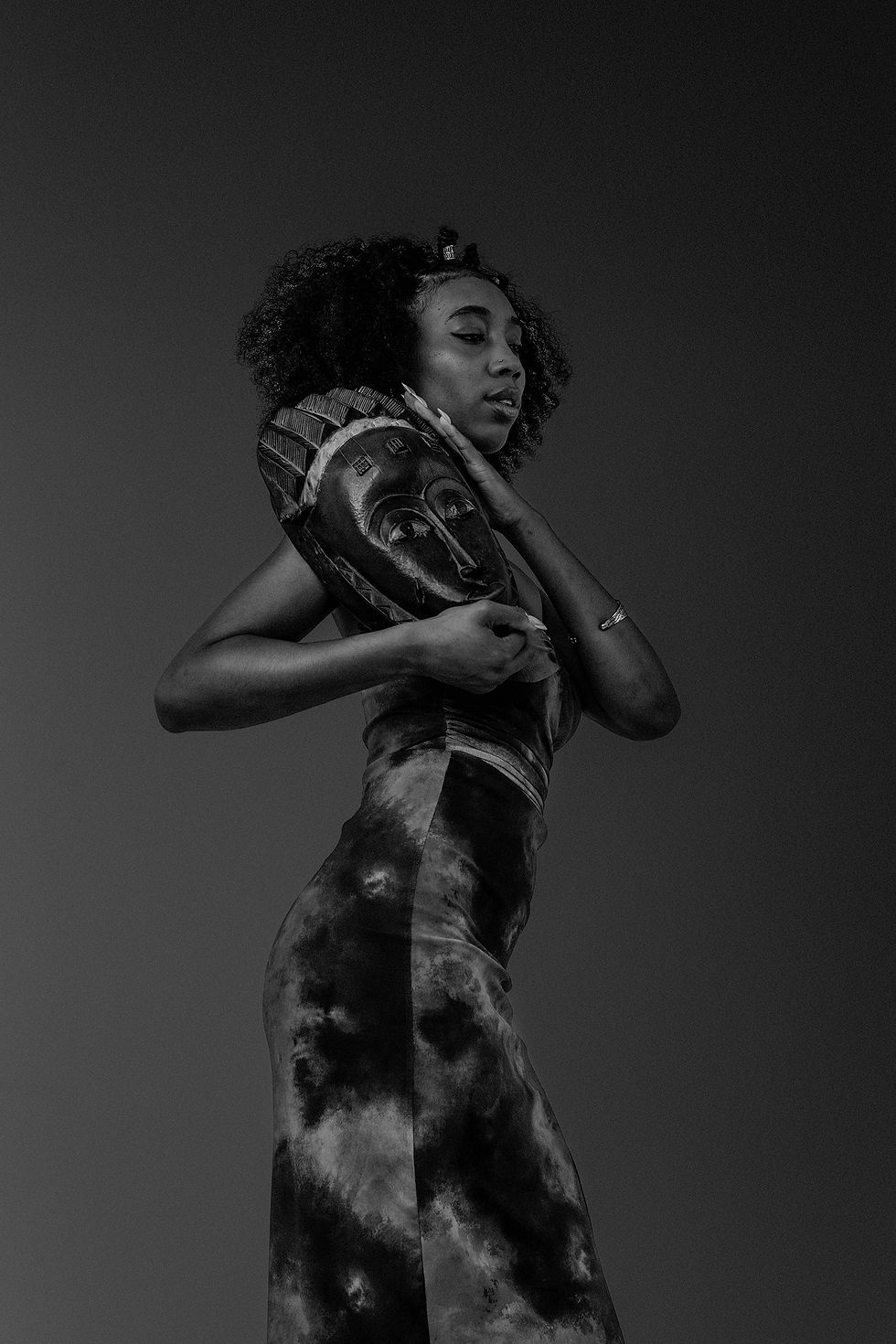
Rubin’s latest series, featuring the pieces see through me and speak through me, reminds us that memory is resistance. Remembrance, appreciation, and introspection are the keys to building the future, as there is no better way to change it than by remembering what came before. The series features masks and art his father picked up on a recent trip to Ghana, deepening the ancestral connection and relationship between artist, subject, and photo. In asking about what it felt like to interact with pieces, Rubin responded, “It’s not passive; they’re action art pieces. They’re used in rituals and performances, and they’re to be cared for. We act with them, we live with them. The work began to speak for itself.”
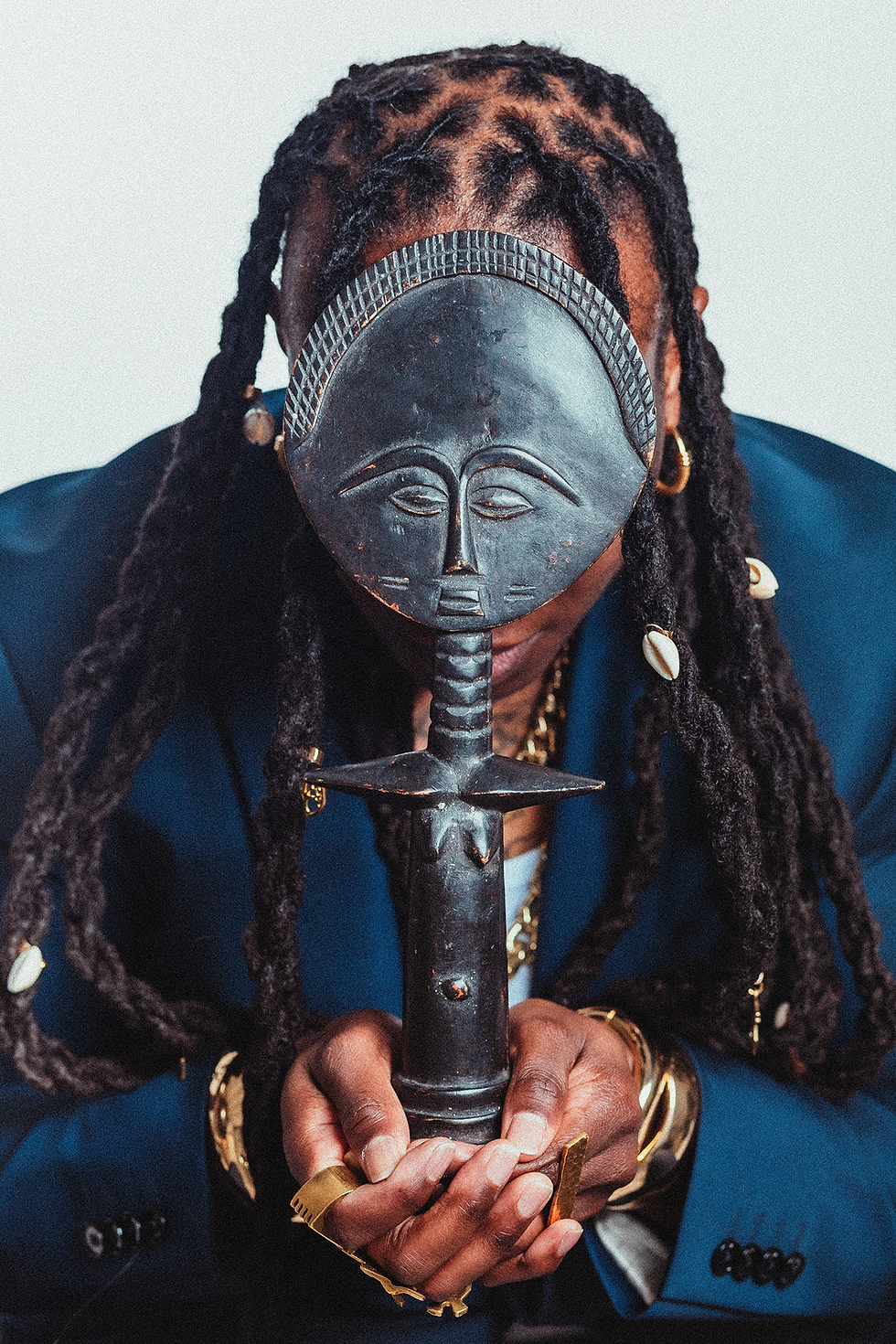
You can’t compartmentalize beauty. The art is alive in all its forms because of who is making the art, breathing through all stages of evolution and devolution. For Rubin, a piece may start as a neat sketch, but once the process is brought into the studio, it is fluid, free form, and a loving spontaneity and holding the ecosystem of a person, not just that specific moment of them. He quotes, “Being multidimensional with the work is critical. The core element that won’t change is what I want to talk about, but it’s a conversation and collaboration and the way it’s told is malleable. It’s freeing that way, to let go of sticky details. It’s easier to be multidimensional when you’re not being algorithmic.”
Rubin doesn’t shy away from being unapologetically himself, from creative challenges, or from creating invigoratingly genuine works of art straight from the soul and heart. He says, “No matter where I go, there will always be a definition of beauty that I butt up against. Think internationally, not domestically. [Thinking] internationally is more unburdened. Black art, my art, must be viewed through a global lens to understand the specificity of it. We’re taught isolationism at the start to define who we are as artists. Resistance is awareness, and true beauty is recognizing flaws. The work of me as an artist is to show it all. These are everyday people posing for my work. It’s not about being perfect; it’s about telling a story. Once you stop putting beauty on a pedestal, a whole new world opens up and that’s when it becomes an action and an inspiration. Beauty is a ritual that lets other people access their own beauty.”
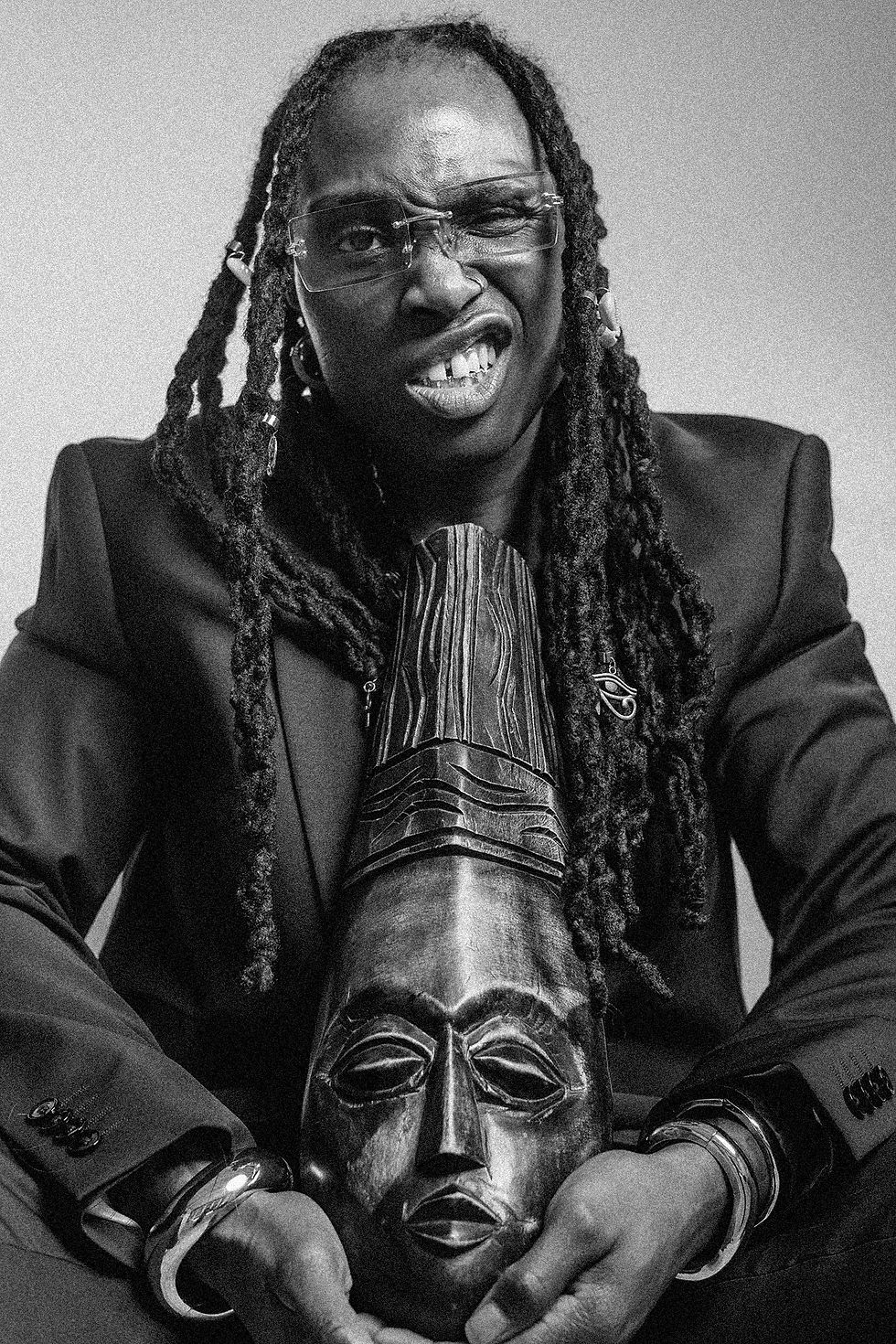
When you look at Rubin’s art, you are reminded how beautiful you are. You are reminded that you are meant to be seen, your culture is worth spending time with, you are a mosaic of your ancestors, and that you, just by the very fact that you exist, are a catalyst. You start to really embody that beauty is a genuine glimpse at your true self. For this very reason, Rubin undoubtedly is a cultural memory worker. He serves as a steward of story, as he sums up his journey: “My favorite part of the process is getting to talk about the art.”
As you view Rubin’s work, how will you cultivate and honor your beauty?
All images copyright Rubin Quarcoopome
ABOUT THE ARTIST
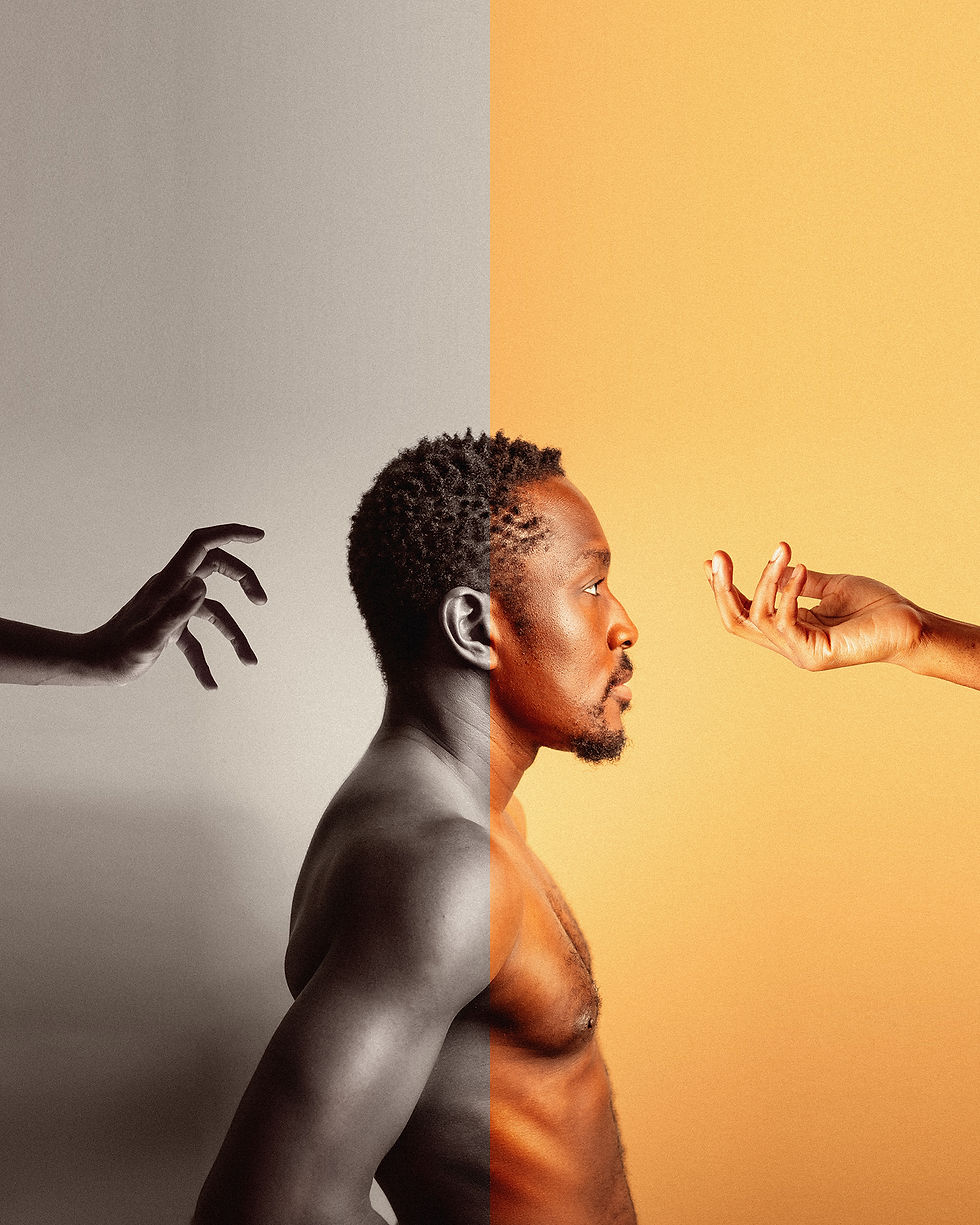
Rubin Quarcoopome is obsessed with stories. From his childhood days in Ghana, hearing his father's tales of the mischievous Anansi to his adolescence in Detroit absorbing anime and movies, stories helped him understand the world and connect with people. With a background in architecture, his artistic work is centered on photography and digital painting. He loves exploring afrosurrealism, finding ways to make the ordinary weird, and the weird ordinary. His work focuses on telling Black stories and opening doors and ways for others in the BIPOC community to thrive.
As an emerging artist, he continues to grow his technical and creative skills in telling complex stories with images. His work has been featured at the Bellevue Arts Museum, Bumbershoot, the Langston Hughes Performing Arts Institute, and many places throughout the Pacific Northwest. He has been selected for the 2025 Midterm City of Seattle Public Art Artists’ Roster and was honored as a Grantee for the 2022 Artist Trust Grant for Artists’ Progress. He has been published in spaces like Blank Space's Fairy Tales, ARTE NOIR’s Depth of Field, and Mob Journal. He continues to passionately create.
ABOUT THE AUTHOR
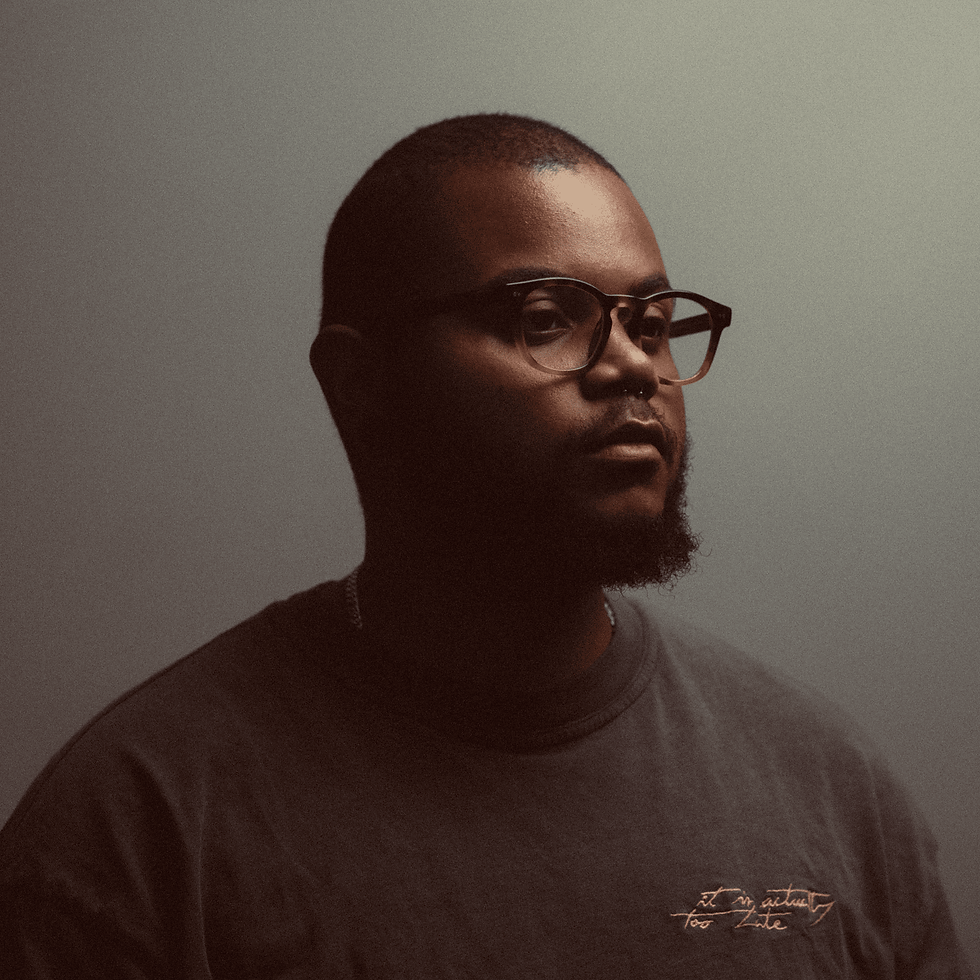
Remy Styrk is a change agent restoring the ability to dream by approaching philosophy, models of care, and humanness as a syndemic.
As a Black trans man and an award-winning filmmaker, musician, and humanist, Remy has worked with a range of companies from HBO and Microsoft to high schools, groups, and non-profits such as North Sound ACH and the Washington State Syndemic Planning Group, researching how people learn through storytelling, cultural anthropology, creative engagement, and designing custom programs.
Ultimately, he is committed to preserving joy, equity, and the testimony of people coming home to themselves through story stewardship.


Comments