
BELONGING, IMPACT, AND ARTISTIC SOVEREIGNTY
Updated: 14 hours ago
By Vivian Phillips
As the end of the year approaches, most nonprofits are preparing annual reports and gearing up for year-end campaigns. We are no different, except when it comes to the annual report.
Quantifying our impact in traditional terms is always difficult.
How do you measure the value of a young adult neighbor who finds joy and comfort in a space surrounded by Blackness—a space that serves as her regular refuge and lifts her spirits? How do you articulate the ways our art gallery is more than a place to display art, where every exhibition is grounded in heart, respect, and recognition? What words or graphs can capture the moments when visitors and partners embrace an ARTE NOIR staff member and express how grateful they are that ARTE NOIR exists? And how do you accurately document the public response to a new ARTE NOIR curated community space at our downtown symphony home Beneroya Hall, filled with art by Black artists?
These moments are part of our impact, even if they don't easily translate into numbers.
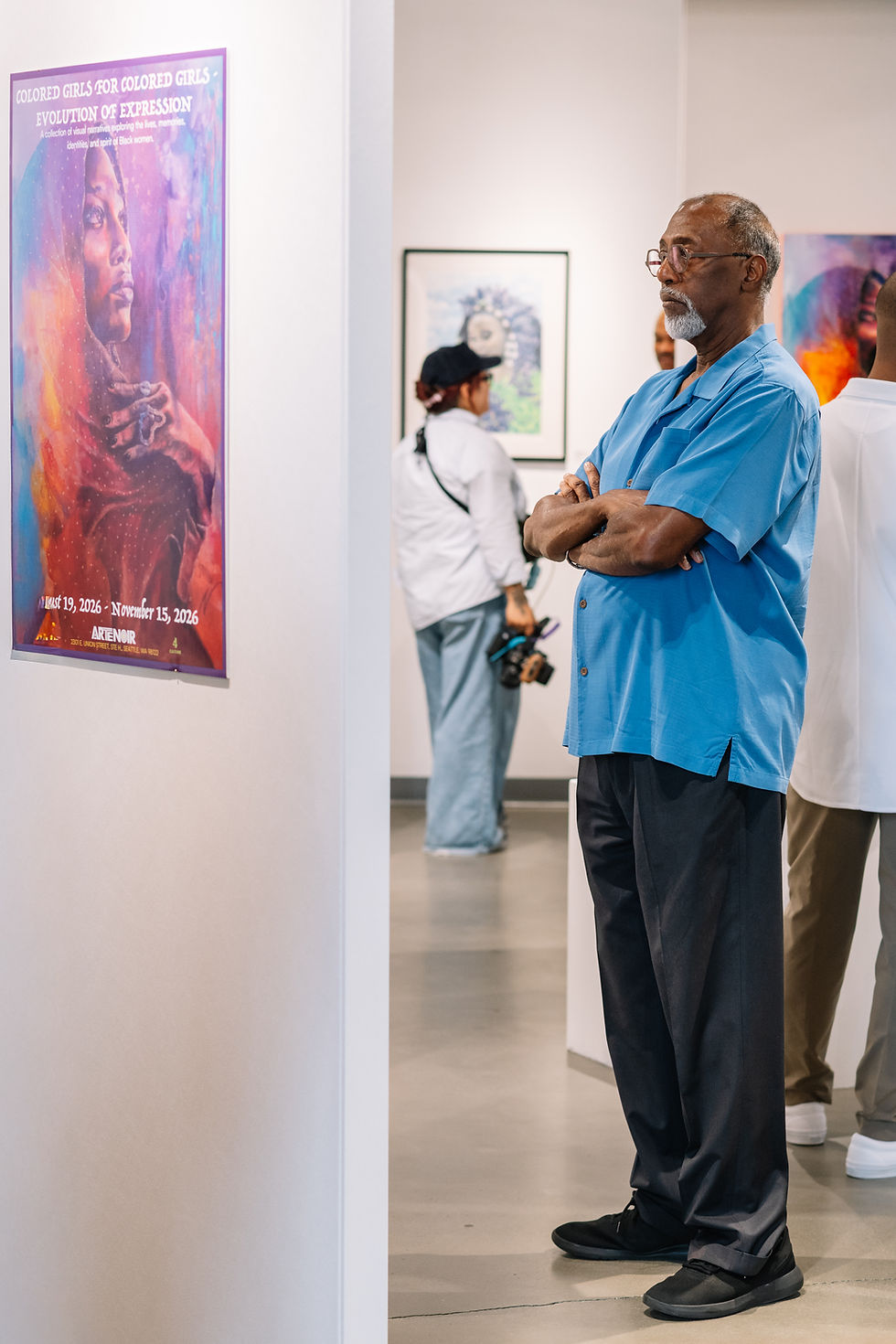
Every grant maker wants to know that their investment is making a difference. And when we receive an investment in our work, it is our responsibility to fulfill the mission that brought those resources to us. Our mission has always been artist-centered. Our work extends beyond placing art on walls, opening doors, and selling products. It is equally important that the art is properly contextualized, that the artist's intentions are respected, and that their voices are heard.
That is why BLACK CANVAS plays such an important role in our work.
In this month's issue, Beverly Aarons offers her second installment as a guest contributor with The Black Artist as Sovereign. She explores the experience of celebrated Harlem artist and gallerist Augusta Savage, whose commissioned sculpture for the 1939 World's Fair was renamed without her consent. Savage's story offers an important lesson about artistic sovereignty: the artist's authority over their work can be diminished when others assume the power to define its meaning. If you have an interest in Black art or Black art history, this is a must-read.
"At ARTE NOIR, we invest as much energy as necessary into creating an environment where Black artists are not disposable."
This month's issue also features a Q&A with performing artist Dahlak Braithwaite, who will bring his Try/Step/Trip performance to Seattle on November 12th. In our conversation, Braithwaite shares his perspective on artistic sovereignty, along with insights into his creative journey and artistic mission.
Founded in 1969 by Arthur Mitchell at the height of the Civil Rights Movement, Dance Theatre of Harlem will bring its legendary performances to Seattle at the end of October, offering another powerful example of Black artistic sovereignty in action.
In 1955, Mitchell made history as the first Black principal dancer with New York City Ballet. He later channeled his commitment to civil rights, his talent as a dancer, and his resources into creating a company that expanded opportunities for Black dancers and challenged barriers in the world of ballet. The company faced significant financial challenges and endured a years-long hiatus before returning to the stage. Today, 57 years after the founding of DTH, Mitchell's mission and legacy continue.
Savage, Braithwaite, and Mitchell represent different experiences of Black artistic sovereignty. Savage's authority over her own work was undermined; Mitchell built an institution to create opportunities too often denied to Black dancers; and Braithwaite continues to define and share his artistic vision on his own terms. Their stories remind us that artistic sovereignty is not only about the art itself. It is also about who has the authority to name it, interpret it, present it, and determine how it will be remembered.
At ARTE NOIR, we invest as much energy as necessary into creating an environment where Black artists are not disposable. We respect their creativity, their perspectives, and their voices. We believe their work deserves more than a place on a wall or a moment in the spotlight. It deserves thoughtful context, meaningful engagement, and recognition of the people and experiences that shape it.
That is the standard we uphold all year long. Yet when we try to articulate this impact in the traditional language of annual reports, our words—and our numbers—can fall short.
So, before we return to working on that annual report, we invite you to spend time with this month's BLACK CANVAS. Read Beverly Aarons's essay on The Black Artist as Sovereign, and revisit her essay on The Black Artist as Witness, published last month. Read our Q&A with Dahlak Braithwaite and hear directly from him about his artistic mission and journey. Let the images of this month's featured photographers wash over you with hints of the past and an eye to the future. And watch the short video below created by local artist barry johnson for an inspirational moment from the artist’s self-documentation of his creative process as he prepared for his latest show that opened this summer. It's a true moment of Zen.
These stories are part of our impact, too. They create space for Black artists to share their work, speak in their own voices, and shape how their stories are understood.
Some of the most meaningful things we do may never fit neatly into a chart or a graph. But they matter. And we will continue to make room for them.
Vivian Phillips, Founder, ARTE NOIR


Comments