
IN THEIR OWN WORDS
In a world where authentic voices can be stifled, appropriated, and altered, it is more important than ever to hear directly from artists. While advances in technology offer new possibilities, they also raise questions about authenticity, ownership, and whose voices are heard.
Art is more than what we see. It carries the artist’s experiences, perspectives, intentions, and imagination.
The artist’s voice is an essential part of that expression, offering insight into not only what they create, but who they are and what they hope to bring into the world through their work.
When artists are left out of the conversation, we lose the opportunity to understand their work through their own words and experiences. We risk allowing others to define the meaning, diminish the intention, or overlook the humanity behind the art.
Artist Dahlak Braithwaite has something to say:
I'm a writer.
I deal in words.
I create art that is
meant to be heard,
felt through vibrations,
and contemplated.
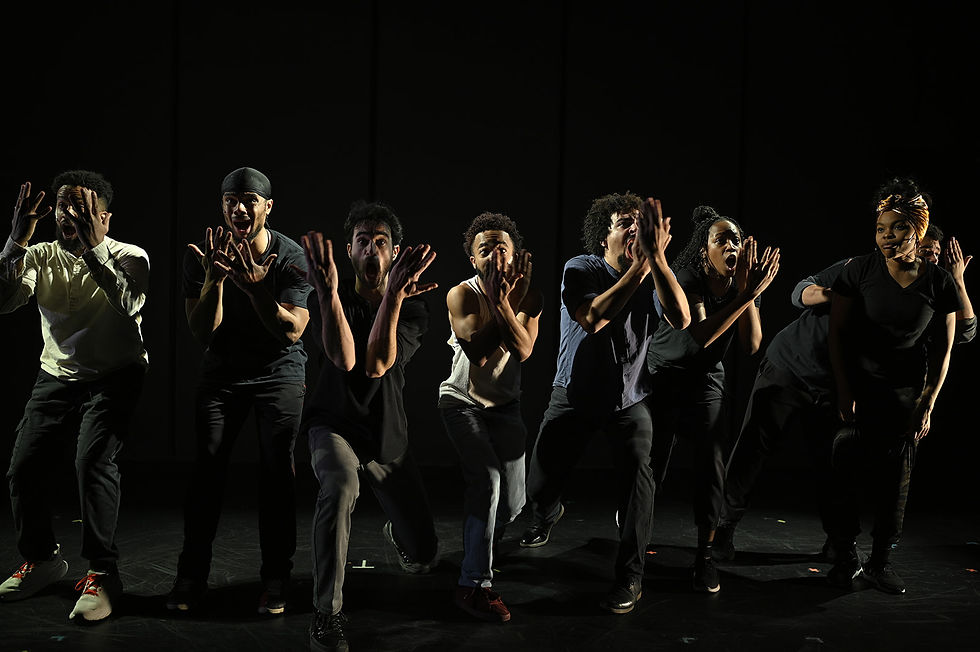
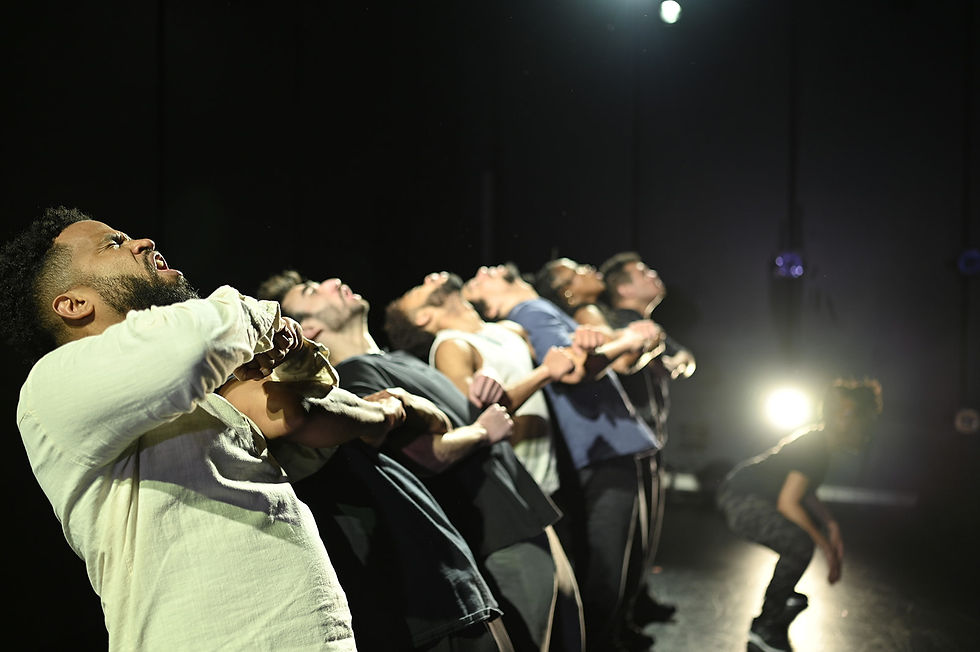
On November 12th and 13th, Dahlak brings his words, vibrations, and his contemplations to Seattle with Try/Step/Trip. Using a hip-hop musical concept that follows a music man as he reimagines his experience inside a court-ordered drug rehabilitation program, Brathwaite draws on his own history with the justice system.
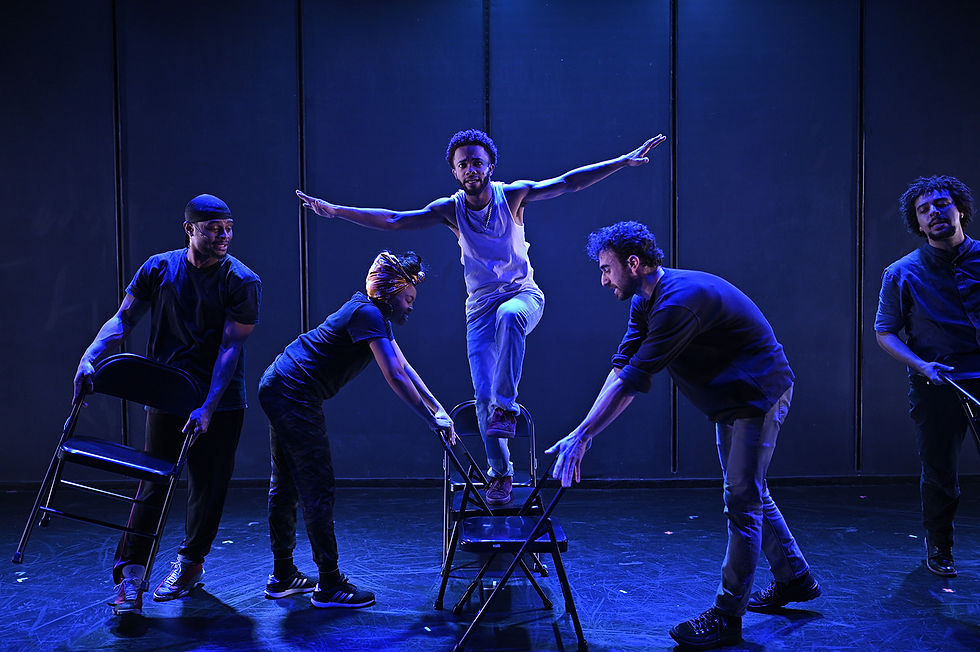
This Q&A with Dahlak Braithwaite is an invitation to listen—to hear directly from an artist about his creative journeys and the ideas that inform his work. Because the artist’s voice matters. And there is no substitute for hearing the story from the person who is living it and creating it.
ARTE NOIR:
When creating work such as Try/Step/Trip, to what degree, if at all, are you considering the process of getting the work out into the world, versus considering simply your need to create?
DB:
For me, getting the work out into the world is part of making it. Theater takes a long time. What it doesn’t have in money, we make up in time. Try/Step/Trip started as a solo piece in 2010, premiered in 2015 as Spiritrials, and went through two residencies at CalArts before the ensemble version opened in San Francisco in 2020. It reached New York in 2026. COMMERCIAL is on a similar clock. I wrote the first draft in 2019, and it won’t premiere until 2027.
I don’t think of those gaps as waiting for money. I see the time as a kind of preservation, letting the idea draw in resources, support, partnership, and momentum. In noncommercial theater, most of the value is in the idea. The closest comparison I can make is, ironically, gambling. Once the hand is played, the value is fixed, but before that, the vastness of possibilities entices people to buy in.
Try/Step/Trip is also a good example of letting constraints shape the work. It’s an ambitious piece, and I couldn’t have made it if I hadn’t first made the smaller, more feasible Spiritrials. I hadn’t made a name for myself yet, and I knew it would be far easier to convince presenters to book a one-person show than an ensemble. Spiritrials made me dig into my toolbag: playing multiple characters, performing my poetry in my own voice and cadence, bringing my studio on stage with me. And right after I started it, I helped adapt my mentor Marc Bamuthi Joseph’s Word Becomes Flesh from a solo piece to an ensemble, so the blueprint for Try/Step/Trip was already there.
Some people might see that as sacrificing your vision so it can sell. I don’t mind acknowledging my constraints and working within them. So much art is about loss, longing, and desire, about being without, so it makes sense that creativity is fueled by limitations, in form as well as theme. It’s important to know where you are in your career and let those limitations fuel you.
ARTE NOIR:
What life experiences have had the greatest impact on your creativity?
DB:
Youth Speaks. I learned the balance of speed, density, and storytelling in the hip-hop cipher, but Youth Speaks pushed me to refine it and broaden its impact. It’s the nation’s largest literary arts nonprofit, and it uses hip-hop and spoken word to engage young people in literacy and leadership. In that community, my style of verse was appreciated as poetry. My storytelling qualified me to design and teach a semester-long curriculum at Thurgood Marshall High School in San Francisco. My sensitivity to crowd response made me useful as a performer in internationally touring theater works.
The biggest lesson was that compelling listeners without losing them isn’t just a rap skill. It works across forms. That’s the muscle behind Try/Step/Trip, a spoken-word, multi-character musical that moves between poetry, song, and step dance.
Youth Speaks is also where I met Marc Bamuthi Joseph. Working on Scourge and Word Becomes Flesh, I learned that hip-hop’s features are logical extensions of theater’s poetic and musical traditions. And it’s why community engagement is part of how I make work. I formed my performance collective, iLL-Literacy, out of that community, and everything I’ve learned about developing within community comes from there.
ARTE NOIR:
What role does the audience play in determining the content of your productions? In other words, is your work audience targeted at all?
DB:
The audience is built into Try/Step/Trip, though I wouldn’t call it targeted in the marketing sense. The piece tells a familiar story: a young Black man stopped by the police again and again until one encounter lands him before the courts. A lot of people in the room have lived some version of that, or love someone who has. The show opens with characters recounting the narrator’s experiences with police profiling as though they were their own, because they could be.
I also imagine an audience engaging with sounds they may never experience in quite the same way again. That’s what I’m writing for: language and music that command attention, entertain the sense of rhythm, and challenge people’s real-time comprehension.
The conversation after the show is as important as the show. I push for talkbacks because I believe that space is sacred. If the piece has done its job, a group of people shares not just a room but a mental, emotional, and spiritual space. During our New York run, we held a talkback with Jonathan McCrory of National Black Theatre for an audience largely of young people from PRY SAFE Brooklyn, and another with poet Ian Manuel. We partnered with the Fortune Society, and we gave away over 200 free tickets through a city initiative. For the tour, we’re building the same kind of local partnerships in each city.
ARTE NOIR:
When we talk about the Black artist as sovereign - having complete authority over their work—is this a place you feel you have that kind of authority? And what are the things that most challenge your sovereignty?
DB:
I have a lot of authority over the vision of Try/Step/Trip, since it’s my story and my language, and I’m the writer, composer, and performer as well as the narrator. But sovereignty doesn’t mean working alone. I think of it as knowing exactly what you bring, and then making room for others to bring theirs.
My principle comes from improvisation: take the lead with your strengths and support the strengths of others. When we developed the piece at CalArts, I went into each residency with a firm grasp of the sonic elements, so the choreographers, designers, actors, and director could offer their own strengths. That’s why the step dance, which Toran Moore choreographed, does so much of the storytelling, and why Roberta Uno’s direction shaped the ensemble the way it did. The authority is mine to set and theirs to enhance.
What challenges sovereignty most is capacity. My definition of creative freedom has two parts: the freedom to make what I envision, and the space and capacity to actually make it. A multi-performer musical is expensive to build and expensive to move, and I’m constantly urged to shrink it into something that looks more feasible. When you try to disrupt a system, you’re naturally cut off from its resources. That tension is why the tour matters to me. It means presenters are choosing the show at its full scale.
ARTE NOIR:
James Baldwin described the artists' role as "having a deep love for truth-telling and challenging society's illusions." How does your work illustrate the truthfulness of that statement?
DB:
Try/Step/Trip tells the truth about something society treats as normal. It places my personal experience in the criminal justice system inside the larger history of structural racism and Black American music. Step is rooted in Black fraternities and sororities, where rigorous induction is a rite of passage, and the show uses that to draw a parallel to the justice system functioning as a rite of passage for young Black men. The whole piece is built to de-normalize that ritual.
The Conductor, who narrates and controls the music, also draws connections between the church and the court. They swear by the same book and share words like witness, testimony, confession, and judgment. The piece uses satire to unsettle the audience. One character raps to the narrator, “we been locked up since the day we arrived, you’ll be good, you’ll be fine.” The laugh and the discomfort come together, and that’s the illusion being challenged.
That same instinct runs through everything I make. Using the personal to illuminate the systemic is the common thread. COMMERCIAL turns that on myself, looking at my own complicity as a storyteller, and Dis/Closure takes it into stigma and masculinity.
ARTE NOIR:
What does your work illustrate about freedom and personal authority?
DB:
Try/Step/Trip is about someone facing a choice about what to do with something inherited. The narrator inherits a script written for him by the police, the courts, and the culture around him, and he’s pushed toward it again and again. Over the course of the show, he wrestles with it and sometimes embraces it, until he can make it anew.
I took that idea from hip-hop’s tradition of sampling, which takes records of the past and reinterprets them to manifest a new future. In Spiritrials and Try/Step/Trip, sampling becomes a way of saying “try again” and “repeat and revise.” It’s a metaphor for recovery, for judicial reform, and for personal change. The Conductor controls the music because the story unfolds from the mind of a musician, someone who can take what was handed to him and rearrange it.
It also keeps asking the question I wrestle with myself: did I make this happen, or did this happen to me? The show doesn’t hand over a clean answer. Authority isn’t complete control. It’s figuring out which parts were handed to you and which parts you can still rewrite.
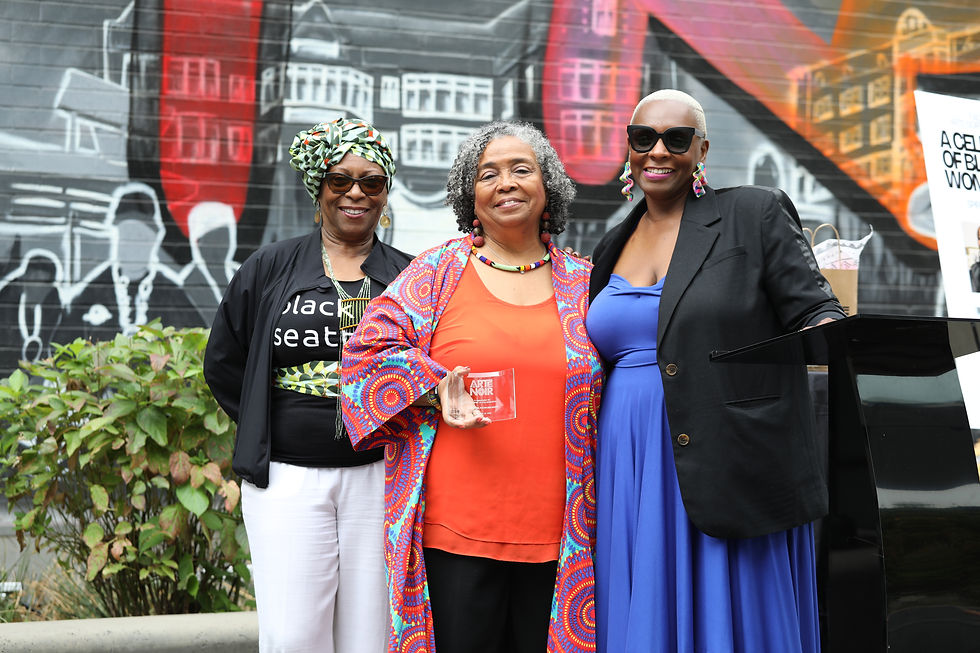
ARTE NOIR is delighted to partner with STG for the November 12th performance, and we are grateful to CD Forum for introducing Dahlak to Seattle in 2017. If you are into spoken word (YOUTH SPEAKS!!!), hip-hop music, and step dancing, please join us to welcome Dahlak and his ensemble to Kerry Hall on November 12th at 7:30 PM. Purchase your $10 tickets here.
Supported by the Seattle Office of Arts and Culture.


Comments